1
/
of
8
My Store
Spring Orange Japanese Maple (Acer Palmatum 'Daidai Haru) - 3 Gallon Pot
Spring Orange Japanese Maple (Acer Palmatum 'Daidai Haru) - 3 Gallon Pot
Regular price
$96.99 USD
Regular price
$103.00 USD
Sale price
$96.99 USD
Shipping calculated at checkout.
Quantity
Couldn't load pickup availability
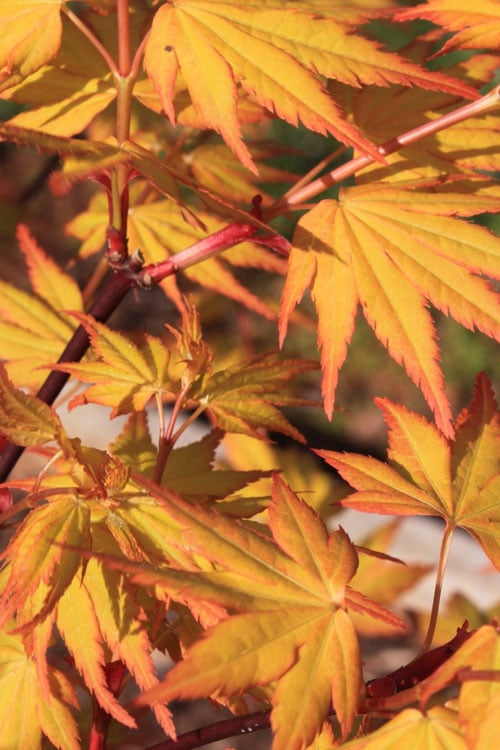
Spring Orange Japanese Maple
Acer palmatum 'DaiDai Haru' - SPRING ORANGE
Plant Details
USDA Plant Hardiness Zones: 5a-8b (9a with mostly shade?) Find Your Zone
Height at Maturity: 14-16'
Width at Maturity: 10-12'
Growth Habit / Form: Upright, Vase Shape to Rounded
Growth Rate: Moderate
Foliage Color in Spring: Bright Orange turns to Bright Yellow
Foliage Color in Summer: Golden turning to Green
Foliage Color in Fall: Bright Yellow and Orange shades
Light Needs: Morning Sun with Afternoon Shade, All Day Filtered Sun; Avoid afternoon direct sunlight
Water Needs: Average
Soil Type: Clay (amend hevay clay to ensure good drainage|, Loam, Sandy, Silt
Drainage: Moist But Well Drained - Well drained soil is a must!
Soil pH: 5.0 - 7.0 is ideal
Maintenance: Low
Resistances: Deer - more info, Heat Tolerant, Insect Resistant, Sun Tolerant
Description
A new introduction hailing from the great state of Georgia, the Summer Orange Japanese Maple, Acer palmatum 'Daidai haru', is an upright selection maturing to around 16 feet tall. It features palmate leaves that emerge a bright orange in spring that contrast beautifully with the distinct, dark burgundy branches. As spring progresses the leaves become more bright yellow with an orange border before turning to yellow-green in summer. As temperatures cool in fall the leaves take on orange and red shades. The dark burgundy branches take center stage during winter. A highly worthy addition to the garden, Spring Orange prefers a shady to partially shaded location with protection from the hot afternoon sun.
Landscape & Garden Uses
To showcase its magnificence and beauty, Spring Orange Japanese Maple is best used in the landscape as a focal point specimen to draw attention to a specific area of the home or landscape. That said, you can plant it in groupings of three or use wo to frame an entryway. Japanese Maples are extremely easy to grow in containers, a practice taken to its most extreme form in the art of bonsai.
Spacing: At least 14 feet apart for space between trees
Note: One Japanese Maple can make a landscape...that is if you don't overcrowd it with other trees and plants. Therefore, when selecting companions to plant under or around your Japanese Maple, make sure to select low-growing shrubs or groundcover plants that won't interfere at all with your tree.
Growing Preferences
Though delicate looking, Japanese Maples are actually very tough and long-lived trees. They are very easy to grow in garden beds or containers.
In their natural habitat, Japanese Maples are understory trees, growing in dappled forest sunlight at the edges of woodlands. Ideally Spring Orange prefers to be grown in similar conditions. It will tolerate some direct early morning and evening sun but avoid direct afternoon sunlight. You can find a complete listing of our sun-tolerant Japanese Maple varieties here.
Most any average garden soil will grow Japanese Maples. They prefer a moist but well-drained soil rich in organic matter. As with so many other ornamental plants and trees, constantly soggy or wet soil can be problematic. So make sure to plant your Japanese Maple in a well-drained site.
Helpful Articles
Click on a link below to find helpful advice from our experts on how to plant and care for Japanese Maple trees.
How To Plant A Japanese Maple Tree In The Ground
How to Plant A Japanese Maple Tree In A Pot
How To Fertilize And Water A Japanese Maple Tree
How To Prune A Japanese Maple
Plant Long & Prosper!
Meet The Wilson Brothers & Staff
Questions? Contact Us!